By Dani Parent, WV Citizen Action Group Executive Director
Here are some updates on bills we highlighted last week, plus some new items, and, as always, ways to get involved and take action.
Climate & Energy
Utility Regulation:
Ratepayer Bill of Rights Phone Banking: We’re working on legislation to protect ratepayers from ever-growing power bills, including some Public Service Commission (PSC) reform, and hopefully including some solar support—but we need our base to show how important this issue is to WV lawmakers. Join a phonebank this Thursday, Feb. 11, to help drive contact in key districts. Learn more and sign up here.
HB 4012 aims to reduce the regulatory burden for utility companies constructing and maintaining electric power generation and transmission facilities. Under a committee substitute approved by the House Energy and Public Works Committee, a company’s justification for the facilities must include an examination of alternatives, including advanced transmission technologies. Further amendments adopted by the House of Delegates require the PSC to consider benefits to ratepayers when deciding whether to grant a certificate of public convenience for the construction of such facilities, and to report annually the Legislature on the “effectiveness of advanced transmission technologies in improving electric transmission efficiency, including an analysis of the costs incurred by, or savings realized by, ratepayers resulting from the use of such technologies.” We’ll review this more closely, but our first reaction is skeptical.
Data Centers:
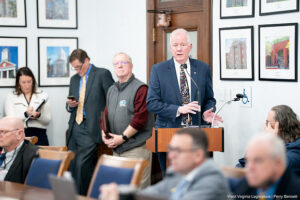
Delegate Fehrenbacher, a member of the Legislative Rule-Making Review Committee, provides a summary of HB 4983, which advances the rulemaking for 145 CSR 20.HB 4983 advances the rulemaking for 145 CSR 20, which passed the House during the 2025 session as HB 2014. This rule defines the process for certification of data center sites. However, the rules approved by the Legislative Rule Making Review Committee lack important transparency provisions that would provide the public with basic facts about what’s being proposed for their communities. The House Energy and Public Works Committee considered and rejected an amendment aimed at addressing concerns about water impacts from high-impact data centers and requiring developers to disclose water usage information before sending the bill to the full House.
Meanwhile, HB 4013, which would provide additional tax cuts and incentives to support data center development, has not returned to the House Finance Committee agenda since it was removed more than a week ago. The state wouldn’t see any meaningful tax benefits from these deals, shifting the cost and environmental burden even further onto regular West Virginians. We are continuing to watch this bill closely with the support of the WV Environmental Council.
Healthcare
Reproductive Freedom:
SB 173, which would double down on the state’s existing abortion ban by severely restricting the mailing and delivery of certain medications in the state, has moved through committee, sending the bill to the full Senate. The bill would make it a felony to mail abortion pills to a person in West Virginia.
Budget Priorities:
Gov. Patrick Morrisey’s tax-cut pitch is riding on a budgeting gimmick: plugging a permanent hole with temporary money. Morrisey’s budget balances his 5% income tax cut by using one-time surplus funds to cover ongoing costs—including Medicaid—after shifting more than $100 million out of the agency that pays the Medicaid bill. Critics say that’s a risky way to “pay for” a permanent tax cut because surplus money may not be there next year. Read more here.
Democracy & Human Rights
Voting Rights:
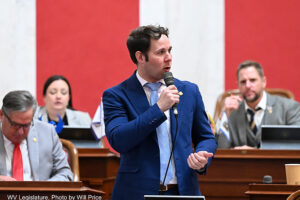
Sen. Joey Garcia, D-Marion, speaks against SB 61, warning it could disenfranchise voters who make honest mistakes, especially seniors and those affected by precinct changes.Last week, the Senate passed SB 61, which is designed to intimidate poll workers and election officials by imposing significant new criminal penalties for counting an absentee ballot that doesn’t meet legal requirements. The bill would bar election officials from counting certain types of provisional ballots, including ballots cast in the incorrect precinct on election day, and eliminate their discretion to overlook certain ballot errors. Read more here.
Not to be outdone, the House has passed HB 4600, a bill that requires absentee ballots to be received (rather than postmarked) on Election Day. Amendments to allow exceptions to the new deadline for students, the elderly, military personnel, people with disabilities, or those with an injury that prevents them from being at a physical polling location were rejected. The bill also reduces the amount of time voters have to request an absentee ballot by one week. Read more here.
The Senate is also moving on a bill passed by the House that would criminalize providing basic aid to undocumented residents and exempt undocumented migrants from restitution if they’re victims of human trafficking. HB 4433 cleared the Senate Judiciary Committee yesterday, Feb. 10. Read more here.
Today marks day 30 of the Legislature, we are halfway through. Use the Legislature’s Bill Status page to follow key bills, and the Listen Live page to find committee agendas and tune in.