- Like
- Digg
- Del
- Tumblr
- VKontakte
- Buffer
- Love This
- Odnoklassniki
- Meneame
- Blogger
- Amazon
- Yahoo Mail
- Gmail
- AOL
- Newsvine
- HackerNews
- Evernote
- MySpace
- Mail.ru
- Viadeo
- Line
- Comments
- Yummly
- SMS
- Viber
- Telegram
- Subscribe
- Skype
- Facebook Messenger
- Kakao
- LiveJournal
- Yammer
- Edgar
- Fintel
- Mix
- Instapaper
- Copy Link
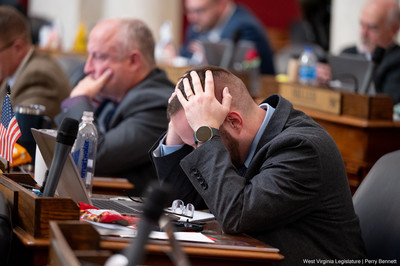
This session followed a clear pattern:
- Industry priorities, particularly around energy and data centers, moved forward.
- Public health and environmental protections were weakened or ignored.
- Lawmakers failed to invest in basic needs like water infrastructure, healthcare, and education.
- A significant number of bills targeted voting access, immigration, and civil liberties
At the same time, several of the most harmful proposals failed to advance, showing that public engagement and advocacy still matter.
A breakdown of what passed, what failed, and what it means:
CLIMATE & ENERGY
Bad Bills That Passed
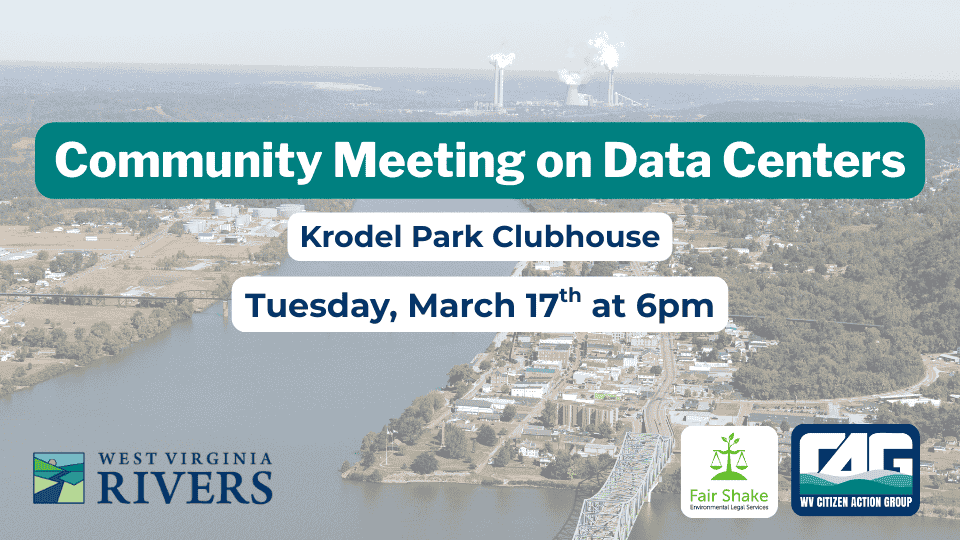
- HB 4983 (Data Center Rulemaking): Advances rulemaking for data center certification. The Senate Judiciary Committee adopted a committee substitute that included an important change to the definition of “inordinate burden.” The rule now requires developers to assess whether their projects would place an inordinate burden on water access.
This addition is significant. Water use has been a primary concern as West Virginia pursues large-scale data center development. Including water access in the definition provides clearer authority to consider water availability and impacts when evaluating projects.
However, concerns about local control, tax distribution, and siting issues remain unaddressed. - SB 686 (Forced Subsidence): Allows more people’s homes, water, fields, and ponds to be damaged or destroyed by longwall coal mine subsidence. Homeowners will only get the appraised value of the home, and not the cost of hauling off the wrecked home and building a replacement. (And where will they live in the meantime?) See photos of longwall mining subsidence here.
- HB 5381 (Governor’s Energy Bill): Relates to developing a comprehensive energy development policy and plan through the Office of Energy. The bill also intersected with SB 420 during the legislative process.
Good Bills That Died
- HB 5648 (Ratepayer Bill of Rights): Would have lowered costs, expanded access to local, cheaper power options, strengthened protections against shutoffs, made it easier to get bill assistance, improved efficiency, and given the public a stronger voice when rate increases are proposed. The House Energy and Public Works Committee did not take up the bill.
Bad Bills That Died
- SB 420 / HB 4026 (West Virginia First Energy Act): This bill required in-state coal plants to run at a minimum 69% capacity to stabilize electric bills. While some saw it as supporting coal and reliability, critics warned it could raise costs by hundreds of millions. SB 420 was amended into HB 4026. The House refused to accept the Senate’s changes, and the Senate refused to recede. A conference committee was requested, but no further action was taken.
- HB 4012 (Utility Regulation Rollback): Aimed to reduce the regulatory burden for utility companies constructing and maintaining electric generation and transmission facilities. While amendments required consideration of alternatives and ratepayer impacts, the bill ultimately failed after the House refused to concur with Senate changes.
- HB 4013 (Data Center Tax Incentives): Would have provided additional tax cuts and incentives to support data center development. The House Finance Committee did not take up the bill.
CLEAN WATER
Bad Bills That Passed
- SB 641 (Aboveground Storage Tanks): Weakens the Aboveground Storage Tank Act passed in response to the 2014 water crisis, when a chemical leak contaminated drinking water for over 300,000 people. The version passed loosens regulatory standards for fewer (and smaller) tanks than originally proposed, but still represents a rollback of critical protections.
Good Bills That Died
- HB 5585 (Clean Water Act) & HB 5525 (Southern WV Clean Water Fund Act): Would have addressed long-standing infrastructure gaps in southern West Virginia, where many communities still lack reliable access to safe drinking water, and would have opened the door to emergency water infrastructure funding for southern West Virginia.
-
- Take Action: To stay informed and get involved, check out From Below and follow along on Facebook.
-
HEALTHCARE & EDUCATION
Good Bills That Passed
- HB 4335 (Medicaid Enrollment Reform): Requires an expedited five-day timeline for Medicaid enrollment. Access to care is always a win. Approved by the Governor and effective upon passage.
- HB 4393 (Foster Care Support): Requires a comprehensive plan to deliver trauma-informed care to foster families and young adults transitioning out of foster care. West Virginia’s foster care system is in crisis, and this is one step toward addressing it.
Good Bills That Died
- HB 4656 (School Discipline Reform): Reclassifies consistently absent students from being “status offenders,” a designation that contributes to the school-to-prison pipeline, and instead mandates prevention-based interventions. The bill passed the House and was referred to the Senate Education Committee, but stalled after the second reading.
REPRODUCTIVE FREEDOM
Bad Bills That Died
- SB 173 (Abortion Pill Restrictions): Aimed at restricting access to abortion pills sent through the mail. Passed the Senate but was not taken up by the House Judiciary Committee.
- SB 805 (Abortion Pill Reversal): Framed as “abortion pill reversal,” but critics note it does not address West Virginia’s maternity care crisis and could divert resources from regulated hospitals and clinics to centers that are not medical providers, are not regulated, and are not bound by HIPAA. The bill passed the Senate and House Health Committee, but was not taken up by House Finance.
BUDGET PRIORITIES
Bad Bills That Passed
- SB 392 ( Governor’s Tax Cuts): Passed even though lawmakers had already approved a budget that underfunds Medicaid, provides no new funding for public schools, and falls short on child care, water infrastructure, and roads.
The Legislature made a political choice to prioritize tax cuts over essential services, leaving core needs unmet.
DEMOCRACY & HUMAN RIGHTS
The House and the Senate introduced more than 100 election-related bills. The House passed a dozen election bills, and the Senate passed six. While not all were harmful, many were rooted in conspiracy-driven narratives that make it harder for West Virginians to vote and unnecessarily complicate election administration. Fortunately, two of the worst bills did not advance after being passed in their house of origin.
Bad Bills That Passed
- SB 640 (Dark Money Expansion): Shields political donors’ employer information from the public, reducing transparency of political spending, and rolls back measures intended to reduce the influence wealthy special interests have over the political process and decisions that impact our communities. Passed early in the session and was signed into law by the Governor on March 2.
- SB 643 (Ends Judicial Public Financing): Repeals West Virginia’s public campaign financing program, which was designed to protect judges from the pressures and conflicts created by fundraising. Eliminating this program further exposes the judiciary to influence from wealthy special interests. Eliminating this program for Supreme Court elections is disappointing and another failure of our broken electoral system.
- SB 4 (Halo Bill): Restricts the public’s ability to record law enforcement by requiring a 30-foot distance and prohibiting actions that could cause “emotional distress” to officers, a vague standard that opens the door to abuse and limits accountability.
- HB 4433 (Immigration Enforcement Expansion): Criminalizes providing basic aid to undocumented residents and includes provisions that exempt undocumented migrants from restitution if they are victims of human trafficking. Signed into law by the Governor.
Bad Bills That Died
- SB 61 (Election Worker Penalties): Designed to intimidate poll workers and election officials by imposing significant new criminal penalties for counting an absentee ballot that doesn’t meet legal requirements. The bill would have barred election officials from counting certain types of provisional ballots, including ballots cast in the incorrect precinct on election day. It would have eliminated their discretion to overlook certain ballot errors. Passed the Senate but not taken up by the House Judiciary Committee.
- HB 4600 (Absentee Ballot Restrictions): Would have required absentee ballots to be received—not just postmarked—by Election Day and shortened the request window. Amendments to protect vulnerable voters were rejected. Passed the House but not taken up by the Senate Judiciary Committee.
- SB 615 (Immigration Enforcement Mandate): Would have required state and local law enforcement to immediately transfer undocumented individuals to federal authorities. WV MetroNews reported on the role of WV state and local law enforcement in the ongoing anti-immigrant surge and the federal dollars being used to entice them to participate. Not taken up by the House Judiciary Committee.
- HB 4198 (E-Verify Mandate): Would have required all employers to use E-Verify. Passed both chambers, but the House didn’t agree to Senate amendments in time to send it to the Governor.
- HB 5319 (Camping Ban): Would have criminalized homelessness by penalizing individuals for sleeping in public spaces. Passed the House but stalled after second reading in the Senate Judiciary.
ONGOING CONCERNS
SJR 9 (Constitutional Amendment on Voting): Places a prohibition on non-citizen voting on the ballot, even though non-citizen voting is already illegal. This reflects a broader pattern of legislation driven by baseless claims of voter fraud.
Sadly, despite the many real problems facing our state, Republicans in the WV Legislature felt compelled to waste time chasing down bogus conspiracy theories that marinate in right-wing social media and cable news. One of these is the supposed scourge of non-citizens voting in our elections.
After trying for several years, only to run out of time on the last night of the session, they have finally succeeded in getting a proposed constitutional amendment on the ballot that would prohibit non-citizens from voting in any election held in West Virginia (SJR 9). Never mind that this is already against the law in every state of the union. Yet, this legislature is fixated on non-citizens and immigrants when it should focus on the real problems facing our state — one of which is population loss — instead of demonizing people who might end up here in search of a better life.
The proposed “Citizenship Requirement to Vote in West Virginia Elections Amendment” will be on the ballot in the November general election.
All this is happening as Congress is moving to mandate proof of citizenship for voting in federal elections, and the US Department of Justice is continuing its bogus election integrity investigation, demanding that states turn over their voter rolls, which include highly sensitive personal information, and suing states that don’t comply, including West Virginia.
The DOJ’s phony “investigation” and the SAVE Act both lean heavily on long-debunked conspiracy theories surrounding the 2020 election. These baseless claims are being used as justification to break the law and interfere with free and fair elections to maintain power and silence the voices of those who don’t support the President. Ultimately, this is about control over who can register to vote, stay on the rolls, and have their vote counted.
- Take Action: Senators gave up on the original SAVE Act last year when their constituents loudly opposed it. Let’s stop it again! Call West Virginia Senators and tell them to reject the SAVE Act.
WHAT’S NEXT
We will continue to monitor the implementation of new laws and prepare for the upcoming ballot measures, SJR 9.
Stay engaged! Public pressure played a role in stopping several harmful bills this session.
For a closer look at how the session unfolded and what ultimately passed or failed, we recommend the following coverage from trusted West Virginia outlets: